Cotton Export from India: Complete Guide for Global Buyers
The complete guide to sourcing premium Indian cotton bales for global textile manufacturers
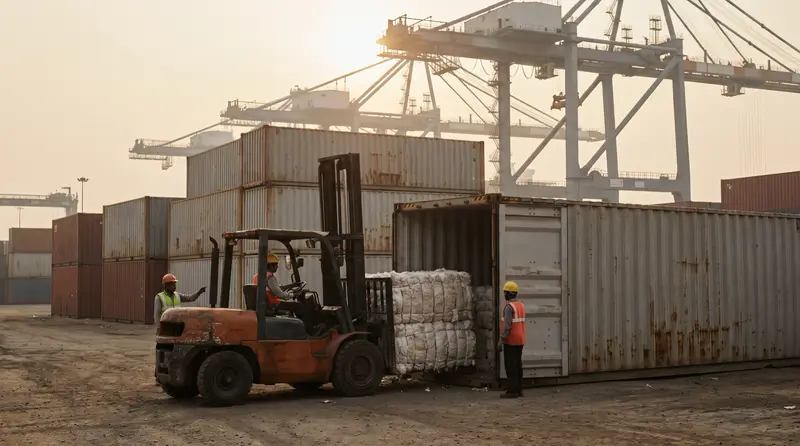
India is the world's second-largest cotton producer, harvesting over 6 million metric tonnes annually from the black soil belt of Gujarat, Maharashtra, and Madhya Pradesh. For textile mills, spinning factories, and fabric manufacturers worldwide, Indian cotton offers a compelling combination of competitive pricing, consistent quality, and reliable logistics through JNPT Mumbai — India's largest container port.
This guide walks you through everything you need to know before placing an order — from the main cotton varieties available for export, to understanding the technical specifications that determine price, to the documentation and logistics that get your cotton from Akola, Maharashtra to your factory anywhere in the world.
Popular Indian Cotton Varieties for Export
India produces several cotton varieties prized by textile manufacturers. Each has distinct fiber characteristics suited to different spinning requirements:
Shankar-6 Cotton
Shankar-6 (also written as Shankar-6 or S-6) is the most widely exported Indian cotton variety. Grown primarily in Gujarat and Maharashtra, it offers an excellent balance of fiber length, strength, and micronaire — making it suitable for medium to fine count spinning.
- Staple Length: 27–30 mm
- Micronaire: 3.8–4.5
- Fiber Strength: 25–29 g/tex
- Trash Content: Below 4%
- Moisture: Under 8.5%
Shankar-6 is the preferred choice for buyers from China, Vietnam, Bangladesh, and the UAE who need consistent quality at competitive prices.
MCU-5 Cotton
MCU-5 (Maharashtra Cotton Unginned-5) is a long-staple variety grown in the Vidarbha region of Maharashtra. It is particularly valued for producing finer yarn counts and is a preferred choice for high-quality fabric production.
- Staple Length: 29–32 mm
- Micronaire: 3.5–4.2
- Fiber Strength: 28–32 g/tex
- Trash: Under 3%
MCU-5 commands a premium over Shankar-6 due to its superior fiber length and is often sourced by mills producing premium yarn for export fabrics.
DCH-32 Cotton
DCH-32 (Desi Cotton Hybrids-32) is a hybrid cotton variety grown in South India, particularly Karnataka and Tamil Nadu. It has excellent spinning characteristics and is known for clean fiber with minimal trash.
- Staple Length: 28–31 mm
- Micronaire: 3.6–4.3
- Fiber Strength: 26–30 g/tex
J-34 Cotton
J-34 is a desi (native Indian) cotton variety grown primarily in Rajasthan and Haryana. It is widely used in the domestic Indian market and has found increasing acceptance in export markets seeking lower micronaire cotton.
Key Technical Specifications Every Buyer Should Know
When buying Indian cotton for export, specifications matter more than variety names alone. Here's what international buyers typically require:
- Staple Length: Measured in mm — determines which yarn counts the cotton is suitable for. Longer staple = finer yarn.
- Micronaire (Mic): A measure of fiber fineness and maturity. Values between 3.5–4.9 are generally preferred. Too low = immature fiber; too high = coarse fiber.
- Fiber Strength (G/Tex): The force required to break a bundle of fibers. Higher strength reduces breakage during high-speed spinning.
- Trash: Percentage of non-fiber material (leaf, husk, etc.). Export-grade cotton typically requires under 4% trash.
- Moisture Content: Should be under 8.5% to prevent mold and quality deterioration during sea freight.
- Color Grade: Based on the universal code — White, Light Spotted, Spotted, Yellow Stained, and Tinged. Most export contracts specify White or Light Spotted.
Current Cotton Price Benchmarks from India (2026)
Indian cotton export prices are quoted in USD per lb or per candy (356 kg), typically FOB JNPT Mumbai or CIF destination port. Prices fluctuate based on:
- MCX (Multi Commodity Exchange) cotton futures
- India's domestic minimum support price (MSP)
- Global supply-demand平衡
- INR/USD exchange rate movements
- ICE Futures (US cotton) as a benchmark
As of mid-2026, Shankar-6 cotton is quoted in the range of USD 0.78–0.92 per lb FOB JNPT depending on the crop season, quality specifications, and order volume. MCU-5 commands a premium of approximately 5–8% over Shankar-6.
The Export Process: From Akola to Your Port
Step 1 — Quality Inspection
Before bales are compressed and loaded, multi-stage quality checks are conducted at the processing facility. Fiber samples are tested for length, strength, micronaire, and trash. A HVI (High Volume Instrument) test report is generated for each lot.
Step 2 — Bale Compression & Bagging
Cotton lint is compressed into standard 170 kg bales (as per DGFT specifications for export) and wrapped in jute or PP bags. Some buyers request specific bagging materials — confirm this before ordering.
Step 3 — Documentation
For international cotton shipments, buyers typically receive:
- Bill of Lading (B/L)
- Commercial Invoice
- Packing List
- Certificate of Origin (from FIEO or Chamber of Commerce)
- Phytosanitary Certificate (if required by destination country)
- Fumigation Certificate
- Weight Certificate
- HVI Test Report
- Quality Certificate from Indian authorities
Step 4 — Transport to JNPT Mumbai
Cotton bales are transported by road from processing facilities in Akola, Maharashtra (or other procurement zones) to JNPT (Jawaharlal Nehru Port Trust) — India's largest and most modern container port in Navi Mumbai. The road distance from Akola to JNPT is approximately 600 km and typically takes 10–14 hours by trailer truck.
Step 5 — Port Handling & Loading
At JNPT, cotton bales are stuffed into 20-foot or 40-foot high cube containers. A 20-foot container holds approximately 16–17 metric tonnes of cotton bales. The port has specialized cotton handling equipment and experienced staff for cargo that requires specific stacking orientation.
INCOTERMS for Cotton Exports from India
Most buyers prefer the following INCOTERMS for cotton purchases from India:
- FOB JNPT: Seller handles transport to port and loading. Buyer pays freight and insurance. Most common for container shipments.
- CIF: Seller pays freight and insurance to the destination port. Used when buyers want a delivered price.
- CFR: Cost and freight paid to destination port, but insurance is buyer's responsibility.
- EXW: Buyer picks up from seller's facility. Used when buyers have their own logistics arrangements.
Why Indian Cotton is Competitive in 2026
Several factors make Indian cotton an attractive sourcing option for global textile manufacturers:
- Price competitiveness: Indian cotton is typically 8–15% cheaper than equivalent grades from the US, Egypt, or Pakistan
- Large available volume: India produces 6+ million MT annually, providing supply security for large buyers
- Strong infrastructure: JNPT Mumbai is one of Asia's most efficient container ports with direct sailings to most major markets
- Quality improvement: Indian cotton varieties have steadily improved in fiber quality over the past decade
- Favorable currency: INR depreciation against USD makes Indian exports more competitive
Common Challenges and How to Avoid Them
Moisture damage: Always specify maximum 8.5% moisture in your contract. Inspect upon arrival — moisture above this threshold causes mold and yellowing.
Trash discrepancies: Sample the container upon arrival and compare against the HVI test report from origin. Disputes are common when trash content exceeds contracted limits.
Contamination: Indian cotton is generally free from synthetic contamination but verify with your supplier that the processing facility follows strict contamination-control protocols.
Weight shortage: Container weight should be verified at origin port. Claim disputes for short weight must be raised with the shipping line within the timeframe specified in your contract.
Ready to Source Indian Cotton?
TGK Agro is an IEC and FSSAI certified exporter of cotton bales from Akola, Maharashtra. We supply Shankar-6, MCU-5, and DCH-32 varieties to textile manufacturers in the UAE, Vietnam, Bangladesh, China, and beyond.
Request a Quote →