Why Your Indian Rice Quote Jumped: Freight, Not Supply
Shipping costs on West Asia lanes have exploded and vessels are queueing at Kakinada — yet India's rice reserves sit at a five-year high. Here is what is actually driving your landed cost, and how to contract around it.
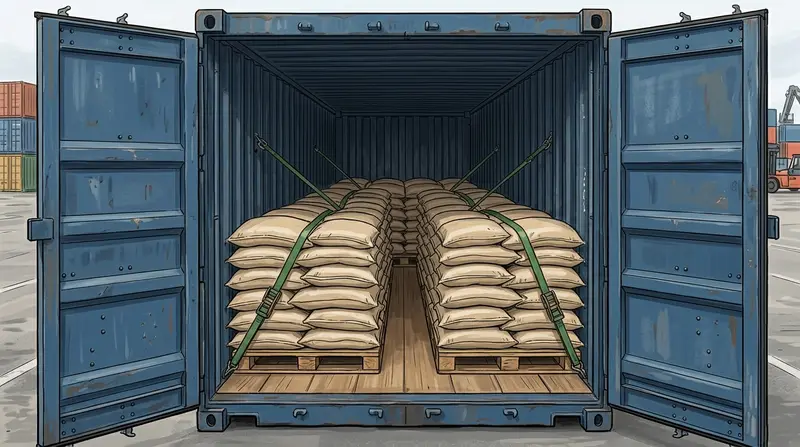
If you buy rice from India, your most recent quote probably looked wrong. Parboiled rice that traded at $335 a tonne FOB in May is now being offered at $390 or above — and suppliers are warning of month-long transit times on routes that used to take a week.
The instinct is to suspect exporter markup. The reporting from Indian business dailies this week tells a different story: freight and congestion, not grain scarcity, are doing most of the damage. Here are the numbers, as reported by Business Line, the Economic Times and Deccan Chronicle on 3 October 2026 — and what they mean for your next contract.
1. Freight Is Up 50x on the West Asia Lane
The most striking figure comes from Suraj Agarwal, Vice-President (West Bengal) of the Indian Rice Exporters Federation, quoted in Business Line:
“Freight charges per container have increased from $100 to $5,000 for consignments to Jebel Ali from Mumbai.”
A fifty-fold increase on India's busiest Gulf route. Transit times on the same lane have stretched from 5–7 days to a full month as vessels reroute and queue through disrupted West Asian corridors. When freight moves like this, it flows straight into CIF and CFR offers — no exporter absorbs a 50x cost line.
2. FOB Prices Have Followed
New Delhi-based exporter Rajesh Paharia Jain told Business Line:
“When we started exports in May, prices were $335 a tonne FOB for 5 per cent broken parboiled rice. Today, no one is offering below $390.”
That is a 16%+ rise at the port gate, before freight. Part of it is freight expectation priced into offers; part is genuine tightening in premium non-basmati varieties (see section 5).
3. Congestion: 20 Vessels Queueing at Kakinada
Demand-side pressure is adding to the logistics mess. Business Line reports African nations are panic-buying and stockpiling rice, spooked by El Niño weather forecasts and the war risk around Ukraine and Iran. At Kakinada port alone, 20 vessels were anchored simultaneously waiting to lift roughly 6 lakh tonnes of rice.
Congestion of that order slows turnaround for everyone on the berth — including cargo booked weeks earlier — and pushes demurrage into landed costs.
4. Supply Is Not the Problem
Here is the reassuring half of the story. Food Corporation of India data cited by Business Line shows:
- 39.1 million tonnes of rice already in the central reserve as of mid-September
- Plus 30.75 million tonnes of paddy still to be milled — another ~20.6 million tonnes of rice
- Stocks at a five-year high, comfortably above prescribed buffer norms (confirmed separately by Deccan Chronicle)
Surplus is visible elsewhere too: by end-August, 214 crore litres of ethanol had been produced from surplus FCI rice, with another 64 crore litres from damaged foodgrains. Governments do not divert grain to fuel when food security is tight. Physical supply for export programmes is there.
5. But Variety and Quality Are Tightening
Aggregate plenty does not mean every variety is cheap. The same reporting flags:
- Season rice production expected at least 10% lower after an uneven Southwest monsoon, with premium non-basmati varieties hit hardest
- Sona Masuri at ₹58–59/kg domestically, up from ₹45–46; Swarna Masuri at ₹36/kg, up from ₹31–32
- Exporters paying ₹2,450/quintal for IR64 paddy — above the MSP of ₹2,441 for common paddy
Translation for buyers: volume is available, but specific premium non-basmati grades will stay firm, and origin paddy costs are already above support prices.
6. Manila's Pause Sent Ripples Across the Region
The Philippines temporarily halted rice imports — a move that hit Vietnamese exporters hard and, per Business Line, left Indian ships that had sailed for Vietnam stranded mid-sea. Regional policy shocks like this are why flexible destination clauses and current intelligence matter more this season than last.
7. The Government Shield: 95% Risk Cover, Frozen Premiums
New Delhi has moved to keep exporters quoting despite the disruption. The Ministry of Commerce extended Component II of the RELIEF scheme through 31 December 2026:
- 95% risk coverage on consignments routed through West Asian maritime corridors, via ECGC
- Insurance premiums frozen at pre-disruption levels for eligible exporters
- RoDTEP and RoSCTL duty remissions extended in parallel — refunds of roughly 0.3–3.9% that help exporters hold price lines (ET)
For buyers, this matters directly: an exporter shipping under ECGC cover is an exporter whose ability to perform your contract is sovereign-backed, even if the route deteriorates further.
What Buyers Should Do Now
- Separate the grain from the freight. When comparing offers, ask suppliers to quote FOB alongside CIF. The FOB number tells you the real grain market; the spread tells you the logistics premium you are paying this month.
- Book lead times of 4–6 weeks on West Asia and East Africa routings. The 5–7 day transit assumption is gone for now.
- Do not wait for freight to “normalise” before contracting grain. Reserves are high now, but premium non-basmati paddy is already trading above MSP — the grain side of your quote is likelier to rise than the freight side is to collapse this quarter.
- Ask about ECGC cover and RELIEF eligibility. Suppliers inside the 95% cover framework can commit to execution with far more confidence — and without passing war-risk insurance spikes through to you.
- Keep destination flexibility where possible. Manila's import halt stranded vessels mid-voyage; contracts that allow discharge-port substitution limit that tail risk.
The Bottom Line
Your rice quote jumped because a container to Jebel Ali now costs fifty times what it did, vessels queue three-deep at Kakinada, and transit takes a month — not because India is short of rice. With ~60 million tonnes of rice and paddy in central reserves and a 95% sovereign risk cover behind West Asia shipments, the buyers who fare best this quarter will be those who contract grain early, scrutinise freight lines separately, and lean on covered, documented suppliers.
This article is based on Indian press reporting of 3 October 2026 (Business Line, Economic Times, Deccan Chronicle) and is general market information, not trade advice. Freight rates and government scheme terms change quickly — confirm current figures before contracting.
Buying rice or other agro-commodities from India?
TGK Agro exports rice, pulses, spices, cotton and oilseed products with clear documentation and bank-compliant LC/TT settlement, on FOB, CFR or CIF terms — with ECGC-backed risk cover on West Asia routes. Tell us the product, quantity and destination port.
Request a shipment quote