Private Label Rice and Pulses: Your Brand on the Bag
Why distributors move from reselling branded bags to owning the label
Walk the rice and pulses aisle of any Indian grocery in Dubai, London or New Jersey and the same names repeat: Laxmi, India Gate, Daawat, Kohinoor, Tilda. Those brands are strong because the company that packs the bag owns the label, the shelf and the customer. A distributor who resells them competes on price with every other importer of the same bag. Private label turns that around: the same export grade, packed in 25, 30 or 50 kg bags printed with your brand, sold under your name in your market. This guide explains how it works, what it costs in effort, and when it is the wrong choice.
What private label means at an exporter like us
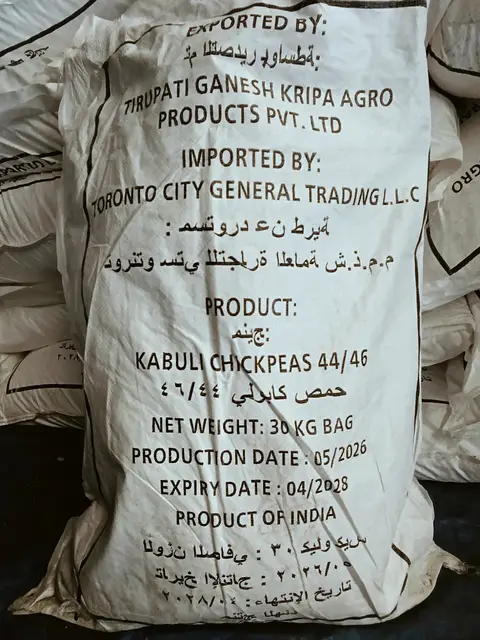
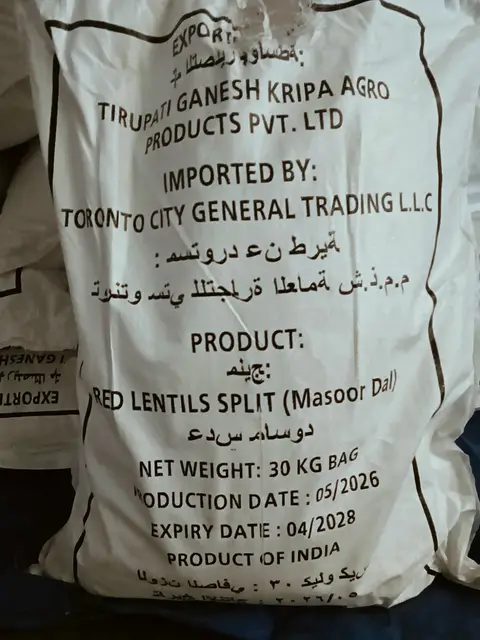
TGK Agro is a merchant-cum-manufacturer exporter. We source, clean, sort and mill rice and pulses at our facility in Akola and export container loads through JNPT Mumbai. Under a private-label order the product is the grade you specify from our catalogue, and the packaging is yours: bulk bags of 25, 30 or 50 kg printed with your brand, and consumer packs of 1, 5 or 10 kg on request. We procure the bags, print them, pack, load and document the shipment. You supply the brand and the artwork.
Branded resale versus your own label
| Reselling an established brand | Your own label | |
|---|---|---|
| Who owns the customer | The brand; buyers can switch to any other importer of it | You; the customer comes back to your label |
| Margin | Set by the brand's pricing and other resellers | Set by you, on export-grade product bought at bulk prices |
| Exclusivity | None, unless you hold a distribution agreement | Full, in your market |
| Product specification | Fixed by the brand | Chosen by you: variety, grain length, broken percentage, polish |
| Marketing | Done by the brand | Your responsibility |
| Minimum order | Often a few pallets | Usually one container per SKU for printed bags |
| Lead time for a first order | Days from stock | Four to six weeks, including bag printing |
The honest summary: an established brand gives you instant shelf pull and no marketing burden; your own label gives you margin, control and a customer relationship, in exchange for a larger first order and the work of building a name. Many distributors run both, using a known brand to open accounts and their own label to keep the profit.
What you provide
- Brand name and artwork. Print-ready files in any language, including Arabic, Chinese or French. We send bag dielines for each size.
- Legal text for your market. Net weight, "Product of India", importer and packer details, lot number and best-before format, nutrition panel and barcode for consumer packs. Rules differ by country, and your importer of record usually knows them; we print what you approve.
- The specification. Variety and grade from the product page, for example 1121 sella basmati, or toor dal with 95 percent split and under 2 percent broken.
What we handle
- Bag sourcing: woven PP for bulk, BOPP-laminated PP for a printed retail look, non-woven or paper for consumer packs.
- Printing, with a proof for approval before the run.
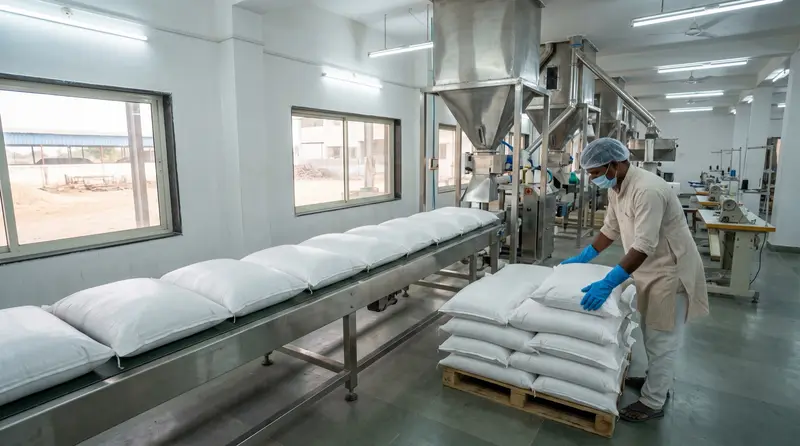
- Processing, packing, weighing and stitching or heat sealing.
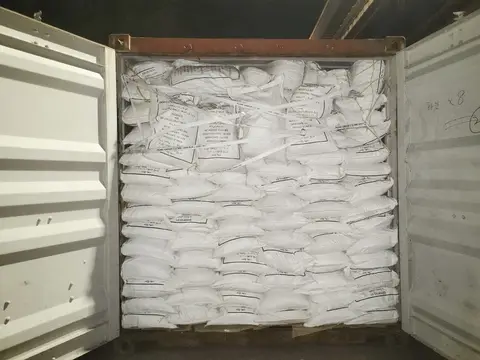
- Container stuffing at Akola and shipment through JNPT with the full document set: commercial invoice, packing list, bill of lading, certificate of origin, phytosanitary and fumigation certificates, APEDA registration for basmati, and the lot's quality report.
- Our FSSAI licence as the packer and our APEDA, IEC and D-U-N-S registrations, which your importer may need on file.
Minimums and timeline
Printed bags carry a minimum print run, which is why one 20-foot container per SKU is the practical minimum for a first order: about 24 to 26 tonnes of rice or pulses. Mixed containers of two SKUs under the same brand are possible once the bags exist. A typical first order runs about a week for artwork and proof approval, two to three weeks for bag printing, and one to two weeks for packing and loading. Repeat orders ship faster because the bags are already in stock, and we can hold printed bags for your next order.
Products available under your label
- Basmati rice: 1121, 1509 and Pusa, as white, sella or steam.
- Non-basmati rice: IR64, Sona Masoori, Swarna and PR11, raw or parboiled.
- Dal: toor, moong, chana, urad and masoor, machine-cleaned, sorted and polished.
- Whole pulses: kabuli chana by count, moong, urad, masoor and toor.
Frequently asked questions
Is the product the same quality as the big brands?
You choose the grade, and the grade is what determines quality. The same 1121 sella that fills a branded bag can fill yours, at the specification you set and verify.
Can you print in Arabic or other scripts?
Yes. We print from your artwork in any language; bilingual bags for Gulf markets are common.
What is the minimum order?
One 20-foot container per SKU for a first printed run. Smaller trial quantities can ship in stock bags with a stick-on label while your printed bags are made.
Do we need our own food licence?
Export shipments are packed under our FSSAI licence. Your own market's rules for importers and labelling apply on arrival, and your importer of record handles that registration.
Can we start with one product?
Yes, and most distributors do. One SKU proves the label; the second and third follow once it sells.
Ready to put your brand on the bag?
Send the product, grade and destination and we will reply with bag options, a dieline and a per-container quote within one working day.
Request a quoteFrom our recent shipments
Our own photos from the packing floor and the loading bay, not stock images.